Why we study the business before we write a line of code
A brief describes a product. A study describes a business. How we studied clinics before building DrInCity, and the scope map that kept it honest.
- A feature list is a guess about the solution. A study describes the business underneath it.
- Write the list of what you will not build. It is the most useful page in the project.
- Ask what breaks the design: walk-ins, delays, two people pressing one button.
- Anything off the map is a change request, never a quiet addition.
- Send someone to the front desk who will watch, not just ask.
DrInCity series · The CEO’s view
Quick answer
Study the business first, because the expensive mistakes are decided before the first screen: who does what, in what order, and what is left out. Sit where the work happens, write down what you will not build, then build the thinnest product that follows. We did this for DrInCity, a live clinic queue platform in Mumbai and Uttar Pradesh.
The short answer
The expensive mistakes in software are made before the first screen exists. They are decisions about who does what, in what order, and what is left out. So we study the business first. Then we build the thinnest product that follows from what we saw.
A brief describes a product. A study describes a business.
Clients arrive with a feature list. A feature list is a guess about the solution, written by someone who lives inside the problem. It is useful, and it is incomplete.
We turn it around. Before we write a line of code we sit with how the work really runs: who touches it, in what order, with what pain, and what happens when the day goes wrong.
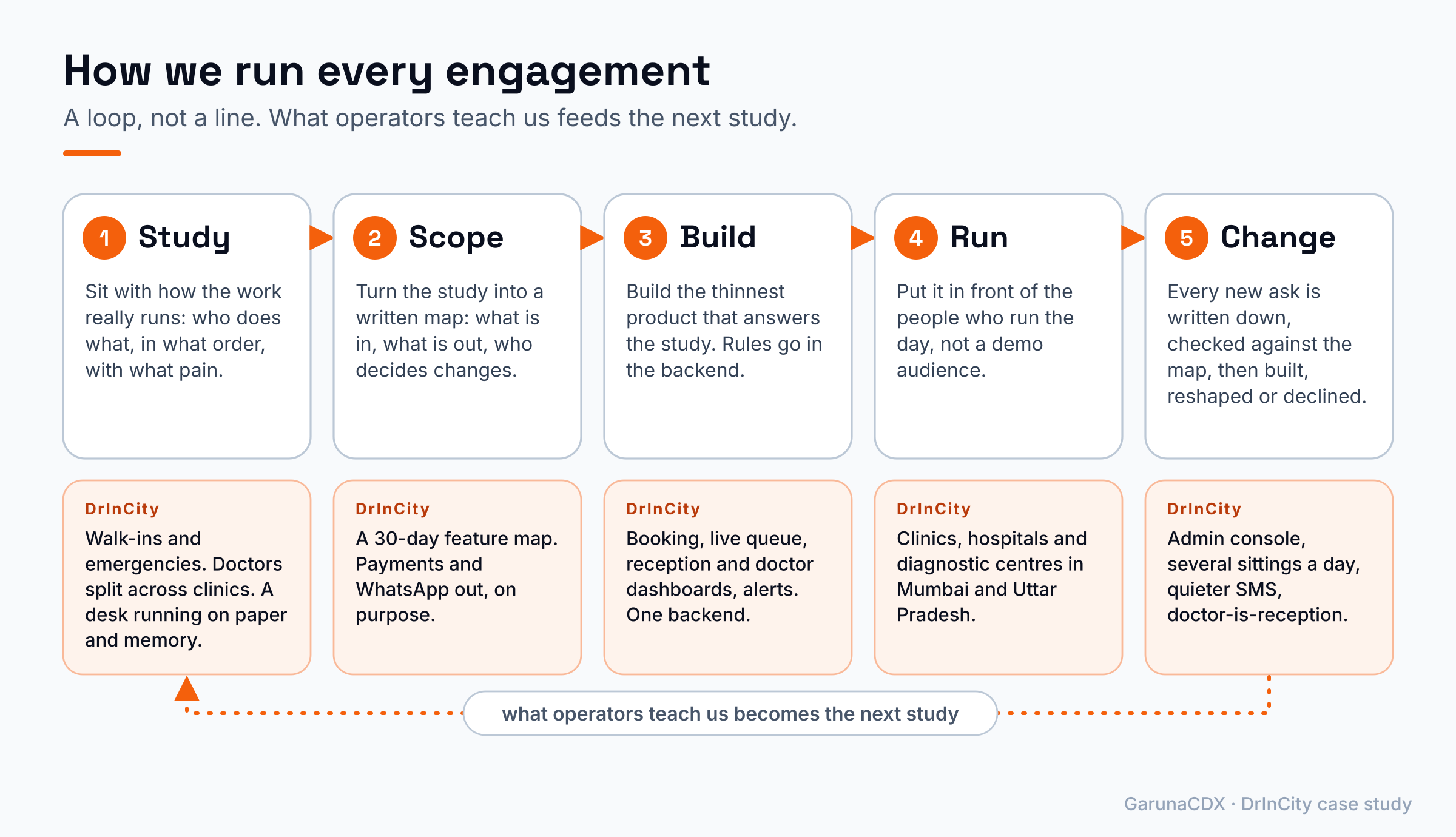
What studying looked like on DrInCity
DrInCity is a real-time queue and booking platform for clinics, hospitals and diagnostic centres in India. We built it end to end, and it is now live with clinics and hospitals in Mumbai and Uttar Pradesh.
The study found four things before any design started:
- Patients wait without knowing how long.
- Walk-ins and emergencies break whatever order the front desk is keeping.
- Doctors work in several places, so the day does not belong to one clinic.
- The desk runs on paper, phone calls and memory, and nobody has time to learn a new tool.
Each one became a rule in the product. A live position and wait estimate for the patient. An emergency insert that renumbers the queue in one step. A doctor model that sits above any single clinic. Screens that ask the receptionist for as little as possible. We cover each in the COO’s piece, how we read a clinic’s front desk.
The scope map was the best document in the project
The first release was scoped to 30 days by a written feature map. The most useful page on it was the list of what we would not build: WhatsApp messages, health records, teleconsultation, AI-written reminders.
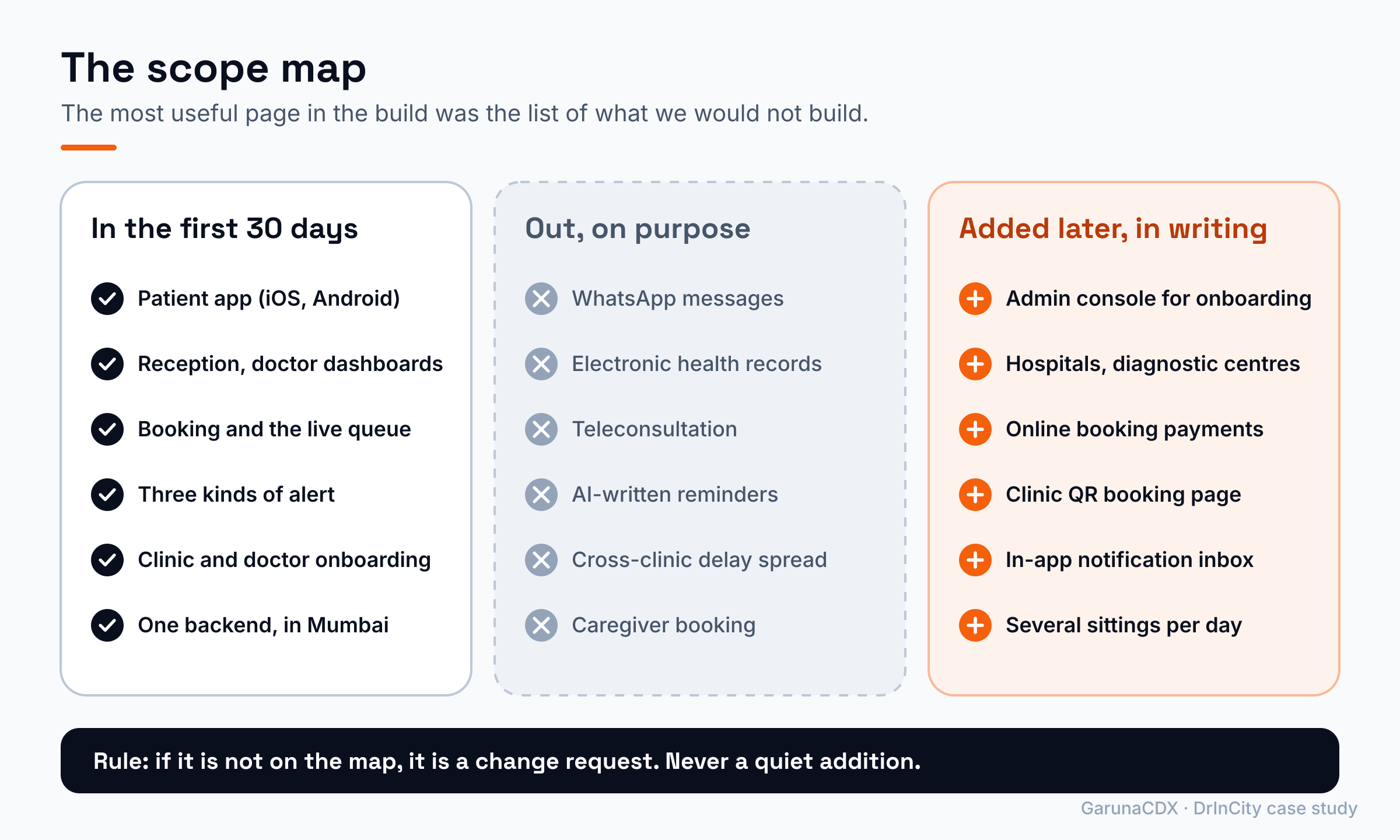
Payments sat outside the first release too. The client reopened them later, in writing, and we built them. That is the system working: a written scope turns “can you also add” into a decision about change instead of a quiet slide. The rest of that story is in how a 30-day scope grew without losing the plot.
Three tests we run before we build anything
- Can the person who runs the day describe the job in one sentence? If they can’t, we haven’t studied enough.
- What breaks it? Walk-ins, lateness, two people pressing the same button. A design that only works on a calm day is a demo.
- What is out, and who decides when it comes in? Write both down. The second answer matters more than the first.
Where studying goes wrong
Two ways. The first is studying forever: a study is done when you can name what you will not build. The second is studying in a conference room. Insight lives at the front desk, not in the brief. Send someone who will watch, not ask.
What it bought us
The product still fits after months of change requests, because every request was weighed against a map that came from the business and not from a template. And clinics join without an engineer in the room. That is the next piece in the series: opening the next city.
The DrInCity facts come from our project documents and our own build notes, tracked in our claim ledger. Aadarsh stated that the platform is live in Mumbai and Uttar Pradesh. We publish no counts of clinics, patients or bookings.
More by GarunaCDX
Let's talk about your build.
Tell us what you are building. A founding engineer replies within one working day with how we would approach it.